
The longing
Here's what 948 groups want to see in next month's budget

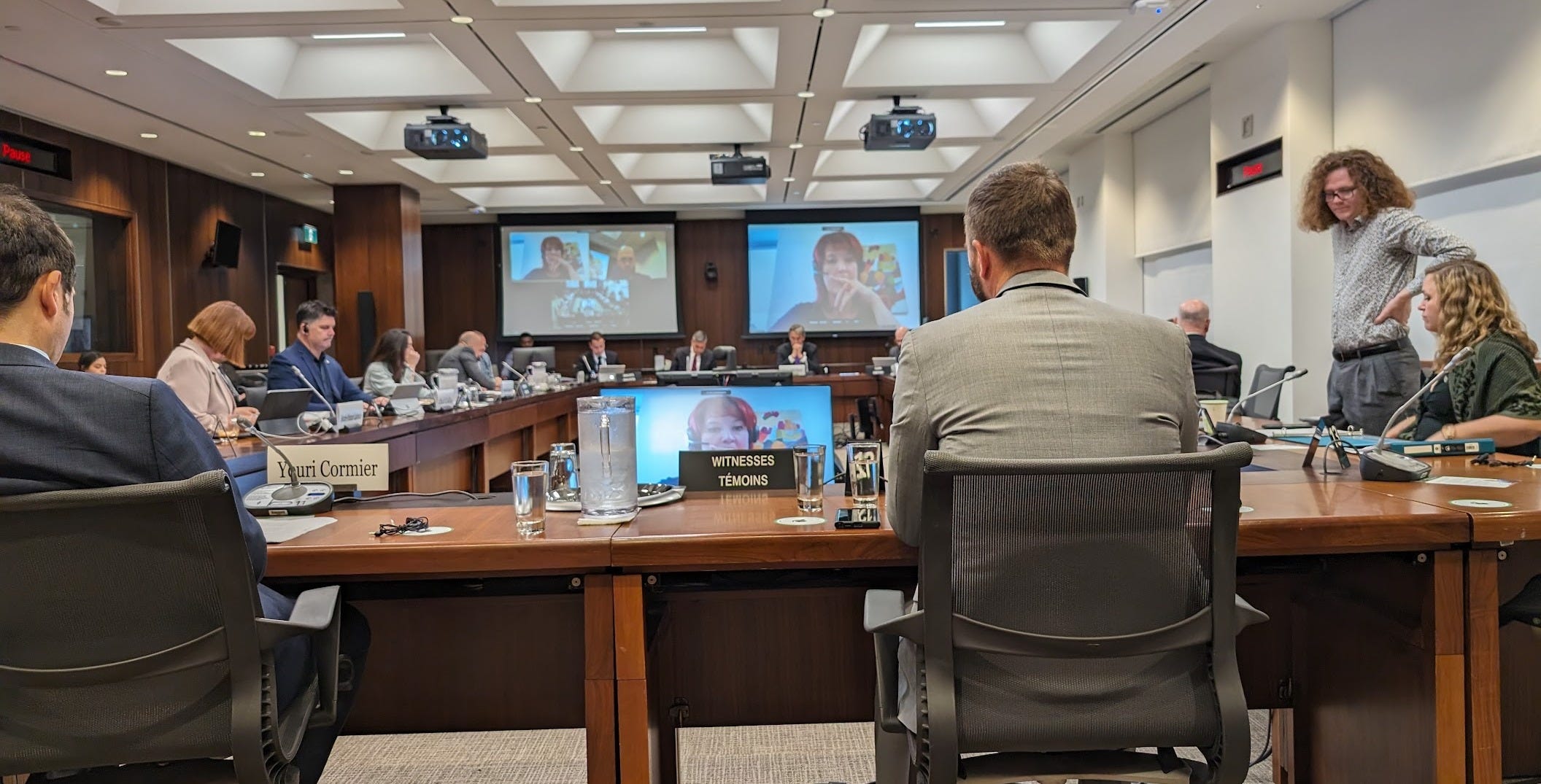
The House of Commons Standing Committee on Finance, known among sophisticates as FINA, consults Canadians on their budget priorities every year. It can be thankless work, as there has not lately been a budget every year, but it’s best to pack an umbrella for sunny days too.
“These consultations are a critical part of the committee’s mandate,” FINA chair Karina Gould wrote when she announced this year’s consultations in June. The filing deadline was Aug. 1. The committee has still not produced a report. In fact it has held no meetings to hear from witnesses. (To be fair, the committee did hear witnesses and produce a report when it did its pre-budget consultations for the 2025 budget the first time, at the end of 2024 when Justin Trudeau was the prime minister.)
This gets us close to an open secret, which is that the committee’s consultations are not a critical part of the minister’s work. François-Philippe Champagne has been conducting his own consultations, after all. And there’s a lot of speculation about how much latitude even Champagne has to make decisions, given his boss’s interest in questions of money. So it would be optimistic to hope that if FINA did produce a fresh report, say maybe in a late session after bong hits next Wednesday, that it could force any late edits to the budget, which is due Nov. 4.
Still, Gould and her colleagues put the question: what would you like to see in the federal budget? They received 948 briefs from groups, businesses, institutions and individuals.
This may be a record. FINA received 828 briefs from the 2024 round of pre-budget 2025 consultation; 858 before the 2024 budget; 706 before the 2023 budget; 495 in 2022; and, going back to simpler times, only 444 in 2017. Longing on a large scale is what makes history, as Don DeLillo wrote. This country is getting better at longing. Groups that sought to bend FINA’s ear this year included the Canadian Association of University Teachers; Pacific Opera Victoria; the Ottawa Rape Crisis Centre; the Côte-des-Neiges Black Community Association; the Médecins du Québec contre le génocide à Gaza; Egg Farmers of Canada; the Union Gospel Mission; and Cenovus Energy.
I think what drew them in great numbers was an unusually potent combination of trouble and opportunity. Surely everybody understands the world is changing and that the epicentre of that change is right next door. Mark Carney has responded by promising to spend less and invest more. If your group, company or cause depends on federal largesse or at least on federal attention, the distance between a good and bad outcome — between being classified as an investment or shunned as mere spending — is wide.
So they make their case. A sampling:
A group of seven start-up incubators want a 2022 program that helps small businesses protect their intellectual property renewed. “If support for home-grown IP weakens, it will only accelerate” the “founder flight” of Canadian entrepreneurs to the US, the groups write.
Orchestras Canada wants 1% of government spending allocated, permanently, to “arts, culture and heritage.” People who attended an orchestra concert last year are seven percentage points likelier to report they have “very good or excellent health,” the association reports.
Polytechnics Canada would like to see a “Defence Innovation Fund” to make more of the NATO spending windfall happens at Polytechnics like SAIT or Kwantlen. Such institutions “are well-positioned to support rapid prototyping in areas including robotics, advanced manufacturing, engineering, aerospace and cyber-physical systems.”
Montreal’s École Polytechnique noticed what I did about Trudeau’s and Chrystia Freeland’s 2024 budget, which was that 87% of the billions in research spending announced in that budget was to be delivered in future years. Deliver it, is all they ask. Well, it’s not all they ask, but it’s the second of four recommendations.
(One refreshing thing about most of these briefs is that they don’t beat around the bush. They get right to the spending request, on the understanding that nobody is in a mood to wade through flowery language.)
There is a plaintive note to many of the submissions from organizations where people wear white lab coats or use a lot of chalk. Perimeter Institute, the theoretical physics colony created by Mike Lazaridis in Waterloo, sounds nervous. “Continue to support theoretical physics,” its brief says, in the c’mon, guys tone of people who used to think they could expect Liberals to come through. “Nearly 60% of Canadians agree that Canada should prioritize foundational research, even if it doesn’t have immediate technological applications,” Perimeter writes. I have no reason to doubt this, though I am told fewer and fewer of those Canadians work at ISED.
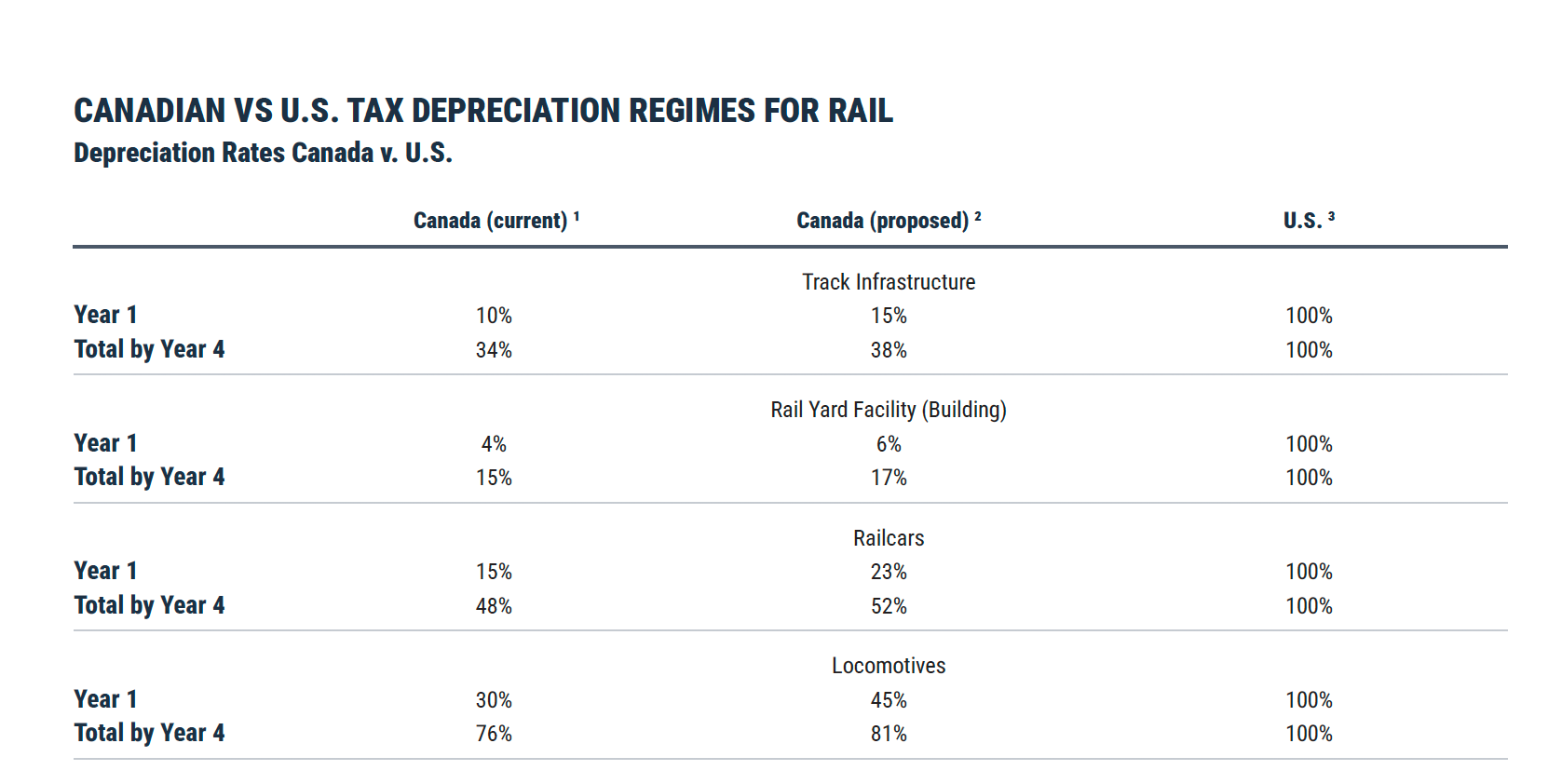
The Railway Association of Canada wants immediate depreciation in the tax treatment of new private spending on rail infrastructure. Their chart shows that the tax benefit for big rail spenders in Canada isn’t close to what their American competitors enjoy. (“We can’t keep up with the Americans” is a common refrain in many of these pre-budget submissions.)
Toronto’s Pearson Airport, which increasingly seems designed to punish you for using it, would like Champagne and Carney to “create an environment that gets major projects built” by… putting Pearson’s ambitious reno plan on the fabled Major Projects List. The airport would also like to see “arrivals duty free,” which would allow international travellers to buy magnums of cologne and caveman-sized Toblerone bars after they land at Pearson, instead of having to stock up at their departure airport. We are ceding vital Toblerone sovereignty to foreign powers, they argue in effect. And sure, I jest, but Pearson says that means we’re “losing an estimated $120 million in sales opportunities to foreign airports.” I see they’ve had their fingers crossed on this change for nearly 20 years.
That’s seven submissions off the pile. If you imagine this post being 135 times as long as it is, you begin to grasp the length of the virtual line outside FINA’s door. Please don’t mistake my brisk tone today for dismissal. Every one of these organizations has good people working in it who are afraid they won’t be able to afford next year the work they did last year. If you’re a social-services organization you know that a projected 81% cut in the budget of Women and Gender Equality Canada, for instance, endangers street-level programs that help women who’ve been through hell.
Of course not every dollar in every program is vital. There are large organizations few Canadians would miss if they vanished. I used to work at one. Every budget everywhere could use a trim. It’s not close to feasible to grant every wish. Together these pre-budget submissions would spend every available dollar many times over. Which is why many won’t even be closely read by the committee’s 10 member MPs. Most organizations know this better than I do, which is why their briefs to FINA are almost the least important arrow in their government-relations quiver. They lobby or they buy billboards or Facebook ads. They hold open houses. They tell two friends. They’re awfully curious to hear what François-Philippe Champagne will say on Nov. 4. And like you and I, they’re beginning to feel in their bones the simple fact that on that day, this country will be closer to the beginning of its trouble than to the end.
The presence of all this demand makes it more important than ever for governments to have a plan, a strategy, some principles to guide them. I write all the time that governments need to be better at listening to Canadians. But that pile of submissions, twice as high today as when I launched this newsletter three years ago, is what Canadians look like if you tell them you’re ready to listen. I remember Lucien Bouchard gave a good speech when he was Quebec’s premier in the 1990s, getting ready to make sharp cuts in government spending. “We’ll have to say no to things we want to do,” he said. So governing is, to some extent, an environment in which you have to know what you want to do, and not do it anyway.
I crack wise, but there’s a poignancy to what goes on in politics that never goes away.
Great column Paul.
Just as an aside on your reference to Women and Gender Equality Canada; its updated mandate says it is committed to advancing equality for “people of all genders, including women”. So, men, too.
This federal government department, like many, has unfortunately fallen victim to fuzzy thinking on matters related to sex, gender and biology.
I wouldn’t lose a wink of sleep over this org losing 80% of its funding.
Longing indeed.
Not surprising that this committee like all before it may have had some serious and well thought out recommendations, all ended up in the wood chipper. Mark Carney is not interested in what the public has to say on any day other than election day or the short few days prior where he attempts like all good politicians to buy their votes. The interesting part of this budget will be to see how much crap he attempts to call investment. At the end of the day, the deficit will be enormous and the only thing that might change that is when Canada's debt rating is lowered to where it should be and that is whatever is closest to the level of a potentially bankrupt nation.