
Three more speeches
Carney in Quebec City, Zelensky at Davos, Poilievre next Friday: your weekend wrap

1. “It was never a straight line”
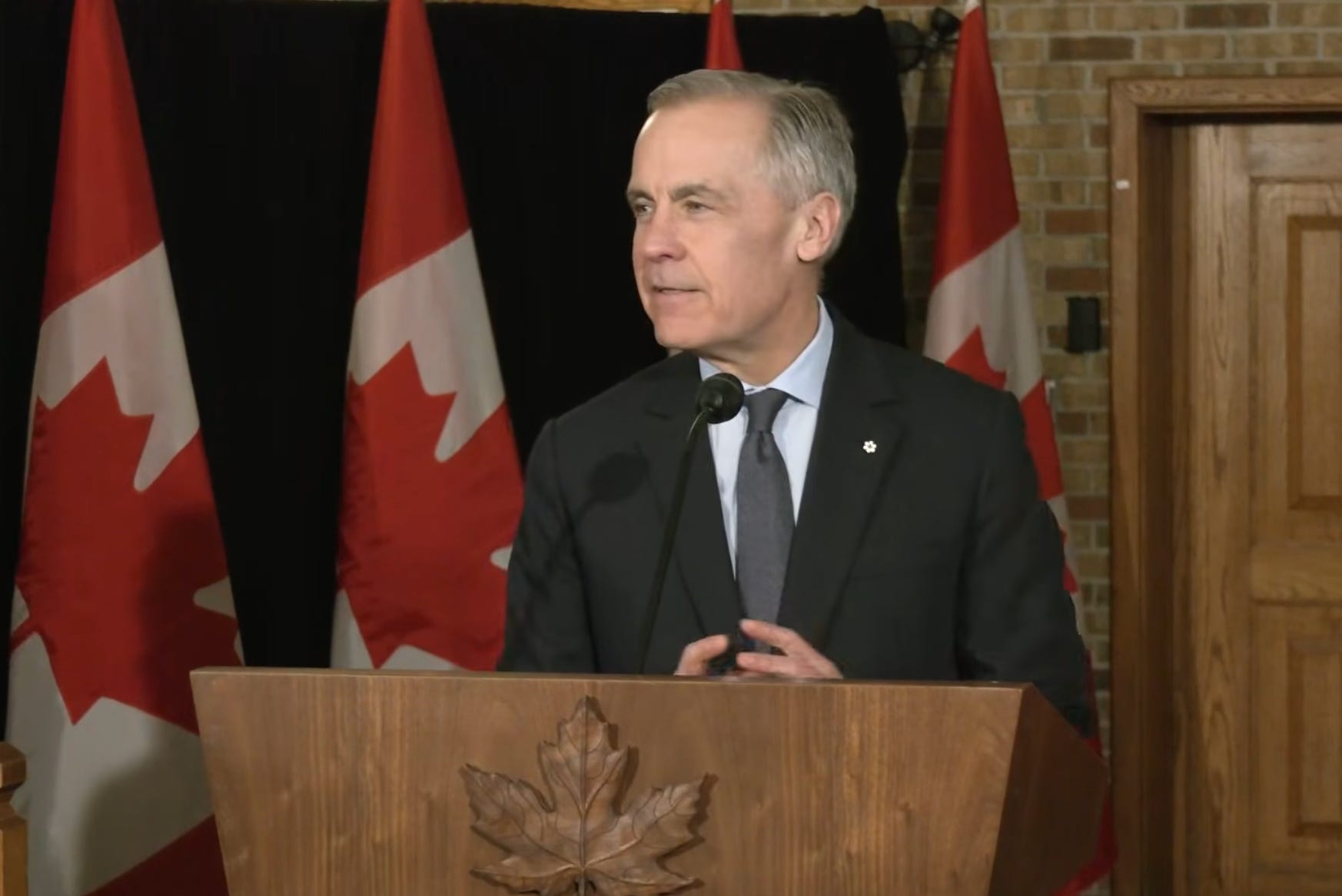
I’ve been enjoying telling friends who work for a living about Mark Carney’s Thursday-afternoon speech at the Liberal cabinet retreat planning forum.
“Did Carney give some kind of…”
“Yeah. He launched his national-unity campaign on the Plains of Abraham.”
“He did WHAT?!”
The speech, which the prime minister delivered to reporters and cameras before kicking off two short days of behind-closed-doors cabinet deliberations, was clearly designed to achieve multiple purposes. In many ways, as a summary of recent and imminent domestic policy, it was quite good. You can read it here. I suspect little of it will be remembered beyond the location of its delivery and some of its more optimistic interpretations of 19th-century history.
I wasn’t in Quebec City on Thursday and Friday, but I get the distinct impression the PMO swiftly realized the speech wasn’t going over well. Carney spoke early Thursday afternoon. The text wasn’t promptly emailed to reporters, as usually happens. When it finally did, many hours later, it carried the title “Speech of the prime minister delivered on the Plains of Abraham.” By the time it went up on the PM’s website, even later, the location was changed to “at the Citadelle of Quebec,” which is synonymous — the fort is dug into a hill in the park — but sounds nicer.
Here’s the part of the speech that served up a lob to a generation of Quebec newspaper columnists:
From the Great Deportation of the Acadians to the Durham Report following the Patriots’ Rebellion, there were efforts by some to impose that model – assimilation, the familiar logic of conquest.
But in the end, that is not the path Canada took.
Why?
First, through the resilience of Francophones. A resilience sometimes quiet, often combative, but always determined to preserve a language, a culture, and an identity.
Then, through pragmatism.
British authorities quickly understood that one does not govern 70,000 people against their will, especially with unstable American colonies to the south.
And so, throughout our country’s history, decisions were taken to build something different. Here. Together.
It was never a straight line. Progress came through tension, compromise, and sometimes failure. But again and again, Canada chose a different path.
From that choice – initially practical, even self-interested – something remarkable emerged. Not a myth. Not a miracle. But a growing commitment that coexistence could make us stronger, that we can build an identity which not only respects our differences, but also celebrates them.
Reactions here and here and here and here and here and here. tl;dr: la survivance was harder than Carney portrays, and the notion that francophones had allies among anglophones is really not going over well.
Paul St-Pierre Plamondon, the Parti Québécois leader who’s well-positioned to win this year’s Quebec election, was already heading into an important weekend party convention when Carney spoke on Thursday. Plamondon announced he’ll throw out his prepared speech for Sunday and deliver a point-by-point rebuttal to Carney. Quebec Liberal MPs heading into a weekend caucus meeting today were asked repeatedly by reporters whether Carney should apologize to Quebecers. “I didn’t see the speech,” Marc Miller said, which is probably both true and not a hearty endorsement.
I have thoughts, as somebody who considers himself an anglophone ally of francophones, but in any Quebec (or Alberta) referendum I won’t have a vote. The short version of my thoughts: Every right I enjoy today is enjoyed by every Canadian, and that’s a story worth telling. But maybe not on the Plains of Abraham. That establishes a certain mood.
It’s probably best that Carney gave this speech on a weekday in January, two days after the speech of his life. It would have been worse to deliver it on the second or third day of a Quebec secession referendum campaign. There’s probably one coming. Carney has time to take his discourse into the shop. He will want to devote significant resources to a post-mortem, the preparation of better lines, and plenty of rehearsal in lower-exposure venues. The stakes are not low. Also, good luck to Joël Lightbound, Carney’s Quebec lieutenant, as he learns how to talk to reporters. I sent three boats.
2. “Thirty or forty soldiers won’t protect anything.”
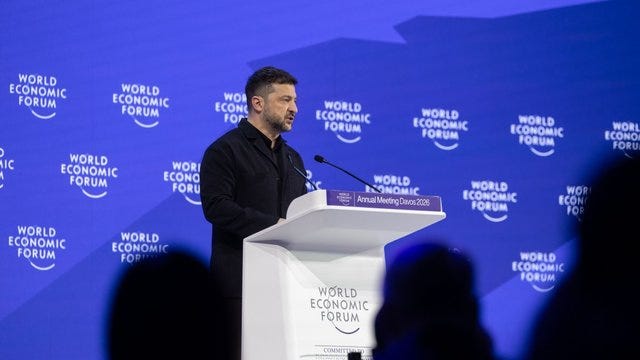
Volodomyr Zelensky spoke at Davos too, dozens of people did, but it got less coverage than Mark Carney because there was less surprise. Guy who’s fought Putin to a stalemate wishes he had more help, ho hum.
The tone was more surprising. The New York Times heard it the way I read it: “Zelensky laces into Europe,” offering “among his most scathing critiques” of the continent whose leaders like to see themselves as better allies than Donald Trump’s US.
Here’s a link to the text of Zelensky’s Thursday remarks. What he said isn’t far from what Scott Bessent or JD Vance in full troll mode might say. Stripped of only the most perfunctory expressions of courtesy, Zelensky’s tone with regard to the EU and NATO is close to contempt.
“Europe hasn’t even tried to build its own response” to the bloody repression of protests in Iran,” he said. “Too often in Europe, something else is always more urgent than justice.” “No security guarantees work without the US.” “Europe loves to discuss the future but avoids taking action today.”
And two remarkable broadsides, aimed at the basic question of whether NATO can function without the United States — or even wants to.
“Today, Europe relies only on the belief that if danger comes, NATO will act.
“But no one has really seen the Alliance in action. If Putin decides to take Lithuania or strike Poland, who will respond? Who will respond?
“Right now, NATO exists thanks to belief – belief that the United States will act, that it will not stand aside, and will help. But what if it doesn’t?”
And…
“If Russian warships are sailing freely around Greenland, Ukraine can help — we have the expertise and weapons to ensure not one of those ships remains. They can sink near Greenland just as they do near Crimea. No problem — we have the tools, and we have people. For us, the sea is not the first line of defense, so we can take actions, and we know how to fight there. If we were asked, and if Ukraine were in NATO — but we are not — we would solve this problem with the Russian ships.”
Since the first flush of resilience after the full invasion began in 2022, it’s been fashionable in some Western circles to remark that Ukraine deserves to be in NATO. But the question Zelensky has begun to ask is whether NATO deserves to have Ukraine in it.
Everyone’s been on a sugar high since Tuesday because Mark Carney said the middle powers can do without the United States. Zelensky asks, with the urgency of a man nearly four years past the scheduled date of his execution: Do what? And when is everybody planning to start?
3. Fill in blank
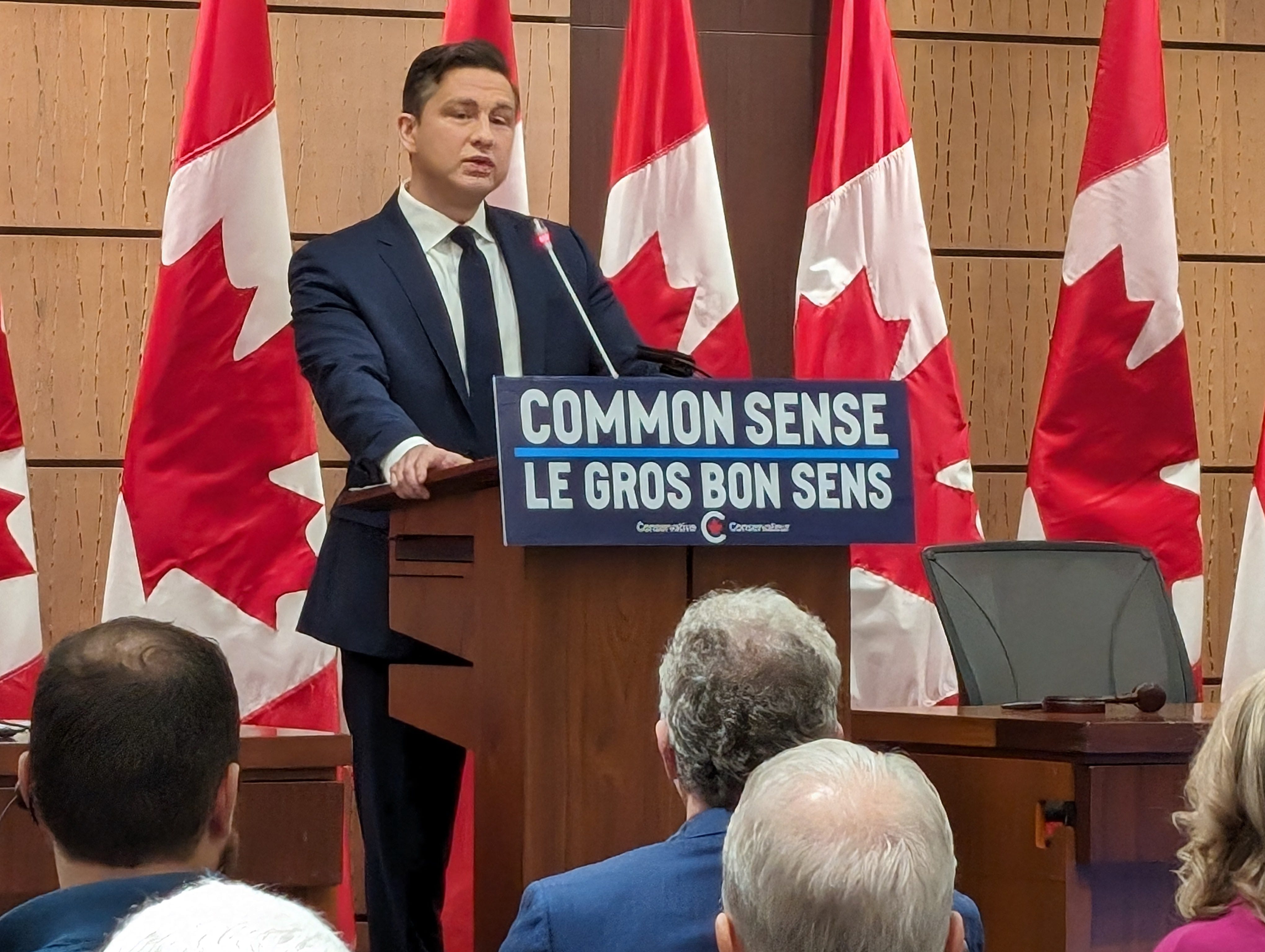
On Friday in Calgary, Pierre Poilievre will give the next speech I want to talk about, to Conservatives in convention assembled before they vote on whether he will keep his job. Voting and hospitality suites will open simultaneously. I haven’t heard from a Conservative who thinks Poilievre will lose the vote outright. I haven’t heard from many who believe, enthusiastically, that he’s the leader the party needs. Enthusiasm can be an unreliable guide anyway. I suspect he’ll pass this test. There’ll be others later. There always are, for anyone in politics.
The Conservatives under Poilievre won more of the popular vote in April than the Liberals under Justin Trudeau or the Conservatives under Stephen Harper ever did, but Mark Carney’s Liberals won more, and more ridings, which is how we count elections anyway. My read of every horse-race poll is that the Conservatives must be counted the underdogs but could well win. I’d vote to keep Poilievre if I held a party card. I’m also not sure he’s the party’s best leader. I just don’t know who’d be better. The names one hears aren’t persuasive. The NDP since 2017 has shown the danger in kicking a leader out without a plan.
After I posted Poilievre’s statement (not a speech) in rebuttal to Mark Carney’s Davos speech, it was fun to read all the comments from people who were surprised he can make a coherent argument. He’s been doing that for years, although it’s not all he does. It was also fun to see people respond so positively to Poilievre’s use of the basic civil tone most Canadians expect from one another. Guess it’s never too late to start.
I’ve written tens of thousands of words on Poilievre. In 2022 I listed some questions I’d ask if I ever got an interview, thus ensuring I haven’t since. I maintain that if he ever does become prime minister, some one-chili-pepper questions from me will be quite literally the least of his problems. But I can’t make a man’s decisions for him.
Sometimes I’ve done my best to explain his behaviour, on his feuds with journalists or with political opponents who probably didn’t even know they were his political opponents until he started calling them names from a safe distance.
I thought “Axe the tax/ build the homes/ Fix the budget/ Stop the crime” might be significant on the day Poilievre first said it in public, in a post that finished: “Poilievre’s tight focus on pocketbook issues resembles nothing so much as the message Justin Trudeau, Stephen Harper and Jean Chrétien used, in different ways at different times, when each ended a decade of rule by their opponents.”
I discussed in detail his ambitious plan to take working-class votes from the Liberals and NDP when he spoke to a union crowd in Gatineau. I lost a few subscribers when I wrote a long account of Poilievre’s year-end 2024 interview with Jordan Peterson, but in hindsight it stands as one of the most astonishing displays of hubris I’ve seen. “We’re stronger than any political party has been — well, maybe even in my lifetime,” he said, four months before losing the next election.
My most recent long post about Poilievre followed his appearance in November at the Economic Club of Toronto. On Friday we’ll see whether I’ll get to write more. I try to learn things every day, and I suspect that at least half of what I do needs improving. It was amazing to watch Poilievre spend half of 2025 insisting he gets everything right the first time. He seems to have scraped out some room for humility as the year wore on. My gentle advice to the Conservative leader is to hang onto that humility even if he has a good night on Friday.
Do I have this right? The guy who loses the election, having campaigned on plain speak and common sense, needs to have humility and go to the public media confessional to pay penance; and the guy who wins the election based on a resume, fear-mongering and mistruths can continue on with his own personal globalization advancement, continue with misrepresentations of history and present, and say “Who cares?” about the main plank in his election campaign. Got it.
Great article, well stocked with humour but anchored by the stripped down to the studs speech that Zelenskyy delivered in Davos. Poor guy, it must be very frustrating to see his neighbours dither and dither and dither.
Re: The Plains of Abraham Accord
Has Prime Minister Carney finally hit a trip wire, with a self inflicted GSW ending his incredible good luck streak?
As a Canadian who lives quite a bit west of Quebec City, even I understand the dangers of standing in Quebec and waving a red flag of British victory on the Plains of Abraham under the noses of separatists. What was he thinking?
The Prime Minister would have been better off to say with genuine pride that the game of curling was introduced to Canada by Scottish soldiers who were stationed at Quebec City.