
Team player
Ken Dryden and politics were an uneasy fit, but we can still learn from him

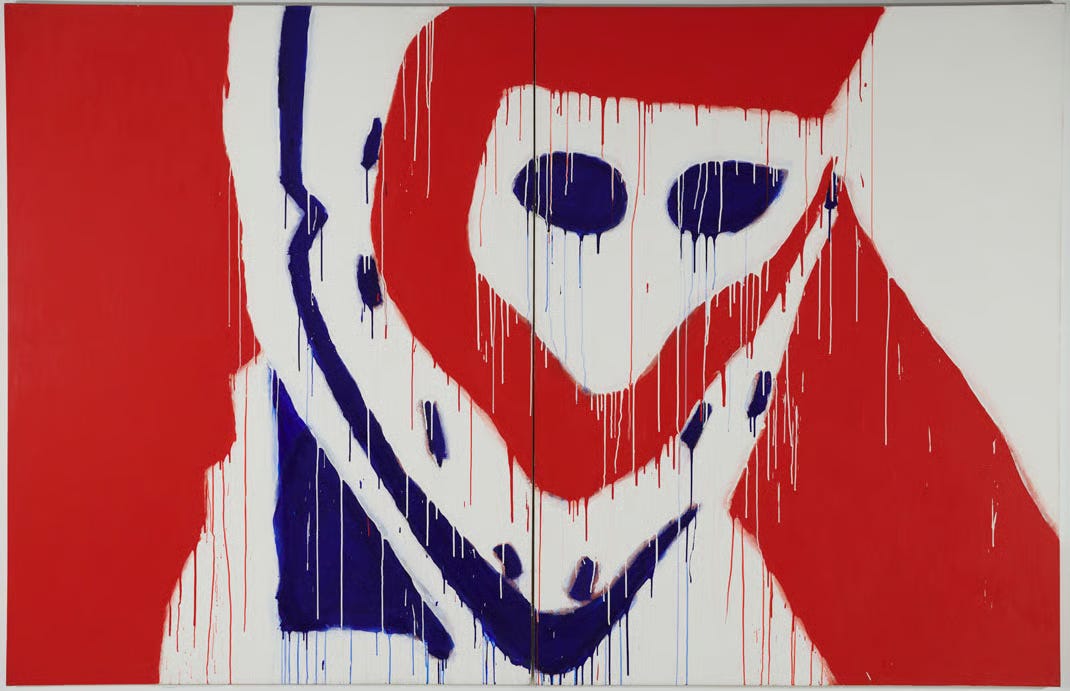
Ken Dryden has died at 78. I haven’t met many gentler men.
In the early days of the Paul Martin government I was new at Maclean’s magazine and, navigating the transition from a punky and irreverent daily (National Post) to a then-cautious weekly, I launched an online blog to blow off steam. My print column was for a broad audience who might not otherwise read much politics in a week. The blog was for political animals who could keep up, get the references, take a joke.
Ken Dryden was elected in 2004, when Paul Martin’s Liberals were already on the back foot, reduced to a minority, soon to be pummeled nightly by televised reports from a commission of inquiry into kickbacks from a government grant program under the Chrétien government. Dryden was a Canadian legend, Calder Trophy, Conn Smythe Trophy, immense in the net during the 1972 Canada-Russia series, pillar of the Montreal Canadiens in a tidy 12-team league. Moving to politics in 2004 wasn’t entirely out of character — Dryden once took a sabbatical from the NHL to study for his bar exam, and he had an early admiration for the U.S. consumer advocate Ralph Nader — but neither was it an easy fit.
He cut the most extraordinary profile, tall and slow-moving. He sometimes enjoyed lunch at Colonnade Pizza, just far enough south of Parliament Hill on Metcalfe Street that it was part of the real Ottawa, not of the capitol precinct. Colonnade serves solid, ’70s-style pizza with lots of mozzarella, the kind of meal you remember eating, and are to some extent still digesting, a week later. Dryden’s trick was to order it with extra cheese, doubling the meal’s terrible effectiveness as a mozarella-delivery mechanism. He told his cabinet colleague Scott Brison: “It’s like a brick of cheese.”
He could not be rushed, and seemed to have decided his best contribution to the tumult of the day would be a surplus of conviction while all around him buckled under doubt and worry. When the going got rough, Dryden would speak even more slowly than usual, his bass-baritone voice would drop another half octave.
I wrote a blog post announcing that Dryden was actually Treebeard the Ent, the ancient tree-man character from Tolkien’s Lord of the Rings, the oldest living creature, 14 feet tall. Treebeard’s meetings with other Ents lasted three days. The Ents were sad but immune to fear. The post was illustrated with a photo of Treebeard:

Gentle fun, by my standards at the time, but one never knows how these things will land with the person concerned. So I was nervous when I spotted Dryden a day or two later, perched on a stool in a rental studio across the hallway from the Maclean’s Ottawa bureau, shooting video. He was stuck sitting on a bar stool, shooting multiple takes of whatever he was doing that day, but he caught my eye through the doorway.
I paused. He reached inside his jacket and produced a printout of the Treebeard post. “My kids love this,” he said.
Earlier this year I bought a copy of Dryden’s 1983 book The Game, which Sports Illustrated has listed among the greatest sports books. I was searching for clues into the personality of another goalie who is new to politics this year. Here’s part of what Dryden wrote about the position he dominated as few others ever have:
“Playing goal is not fun. Behind a mask, there are no smiling faces, no timely sweaty grins of satisfaction. It is a grim, humorless position, largely uncreative, requiring little physical movement, giving little physical pleasure in return. A goalie is simply there, tied to a net and to a game; the game acts, a goalie reacts. How he reacts, how often, 100 shots or no shots, is not up to him. Unable to initiate a game’s action, unable to focus its direction, he can only do what he’s given to do, what the game demands of him, and that he must do. It is his job, a job that cannot be done one minute in every three, one that will not await rare moments of genius, one that ends when the game ends, and only then. For while a goal goes up in lights, a permanent record for the goal-scorer and the game, a save is ephemeral, important at the time, occasionally when a game is over, but able to be wiped away, undone, with the next shot. It is only when a game ends and the mask comes off, when the immense challenge of the job turns abruptly to immense satisfaction or despair, that the unsmiling grimness lifts and goes away.
“If you were to spend some time with a team, without ever watching them on the ice, it wouldn’t take long before you discovered who its goalies were. Goalies are different. Whether it’s because the position attracts certain personality types, or only permits certain ones to succeed; whether the experience is so intense and fundamental that it transforms its practitioners to type—I don’t know the answer. But whatever it is, the differences between ‘players’ and ‘goalies’ are manifest and real, transcending as they do even culture and sport.”
There was more despair than satisfaction for the Liberals in the years, 2004-2011, when Dryden was a member of Parliament I won’t claim he was particularly a beacon of hope, or that more Dryden would have lifted the party’s fortunes. Sometimes things just go badly. Dryden’s oratorical style was inimitable, though quite literally everybody in the Parliamentary precinct could perform a basic Ken Dryden impression at the drop of a hat. He spoke slowly and gravely, as if hammering his words into a rock face. He would string truisms together in a way that seemed overwrought to many and unbelievably inspiring to a smaller number. At a big Dryden speech, many eyes would roll. A few would brim with tears. I was in the middle, skeptical but admiring his insistence on a few first principles.
Here’s a bit from his maiden speech to the Commons, in October 2004.
“We have to work with others together: be flexible, find accommodation, discuss, work out and compromise. Rigid ideologies do not work for us. In many ways, we have had to make it up as we go along.
“In Canada, we live a ‘find a way’ existence. We are a ‘find a way’ people. It is reflected in our habits, attitudes and personality. In the way we look at the world and interact with it. In our culture and sport. In our expressions as a people.
In my other life, I played hockey. Hockey is a game beyond control. We practise it, we make our plans, a coach puts those plans on a board for all to see, the puck drops, and everything goes haywire.
Those who play hockey best, the teams that win, do not agonize at the loss of perfection when the chaos begins.
They accept what they have, gather up the pieces and put them together as fast and as well as they can. They find a way. Different from football's calculations and baseball's order, hockey is a ‘find a way’ game.”
Later, at the Liberal leadership convention in 2006, Dryden was a candidate in a large field. During his speech to delegates at the party’s last delegated leadership convention, a friend of mine at one of the television networks, listening on headphones, noticed an odd background noise. Was there static on the line? Some malfunction? No: Pausing after every short sentence, Dryden was growling, long and low in his throat, probably without realizing it. It was the incongruous sound of awesome conviction.
We remember Ken Dryden today because he was a legendary practitioner of the nation’s greatest sport, and then that sport’s most revered bard. Politics welcomed him but didn’t particularly reward him. Different arenas.
During Dryden’s last years in politics, creeping polarization and the information din caused by social media were already encouraging political strategists to put a premium on uniform message, tightly scripted and repeated through every channel. It got worse after Dryden’s 2011 election defeat and retirement. Surely by now we’ve learned that this ritual barking of slogans is not particularly more effective than any other mode of discourse. It’s alienating: who among us can hope to see a bit of ourselves in our politics when nobody who practices it has any higher aspiration than to be a wind-up toy?
Dryden would have had trouble remembering somebody else’s slogan, and would have been unable to parrot it with any heart. That steady rumble at the back of his throat was a reminder of the awesome intent he brought to the ice, but it came out only when he was being, for better or worse, himself. How odd, and yet how reassuring, that somebody who came among Canadians as an almost impossible hero could write his last public chapters as an everyman. Just finding a way.
I'm told the NHL expanded to 14 teams in Dryden's rookie year. Hockey stuff is hard for me.
I couldn't make this fit in the post, because in the end it's not that significant, but one other moment from Dryden:
In 1977, Centaur Theatre in Montreal staged a play by Rick Salutin about the Parti Québécois's breakthrough election victory only three months earlier. It was called Les Canadiens and it uses hockey as a metaphor for the whole history of Quebec in Canada, culminating on election night in 1976, when the Habs were playing a home game and realized that the crowd's applause had nothing to do with the progress of the game. The crowd was applauding the election returns as they flashed on the scoreboard.
Les Canadiens is an *astonishing* play, and as he hurried to write it, Salutin used Ken Dryden, who was in the Forum for that game, for technical advice. So the cover credit says, "A Play by Rick Salutin. Assist: Ken Dryden."
https://archive.org/details/lescanadiensplay0000salu/mode/2up