
EUCO
Guess who chickens out more often than Trump. Mark Carney could hardly have hoped for a better sideshow as he makes overtures to China

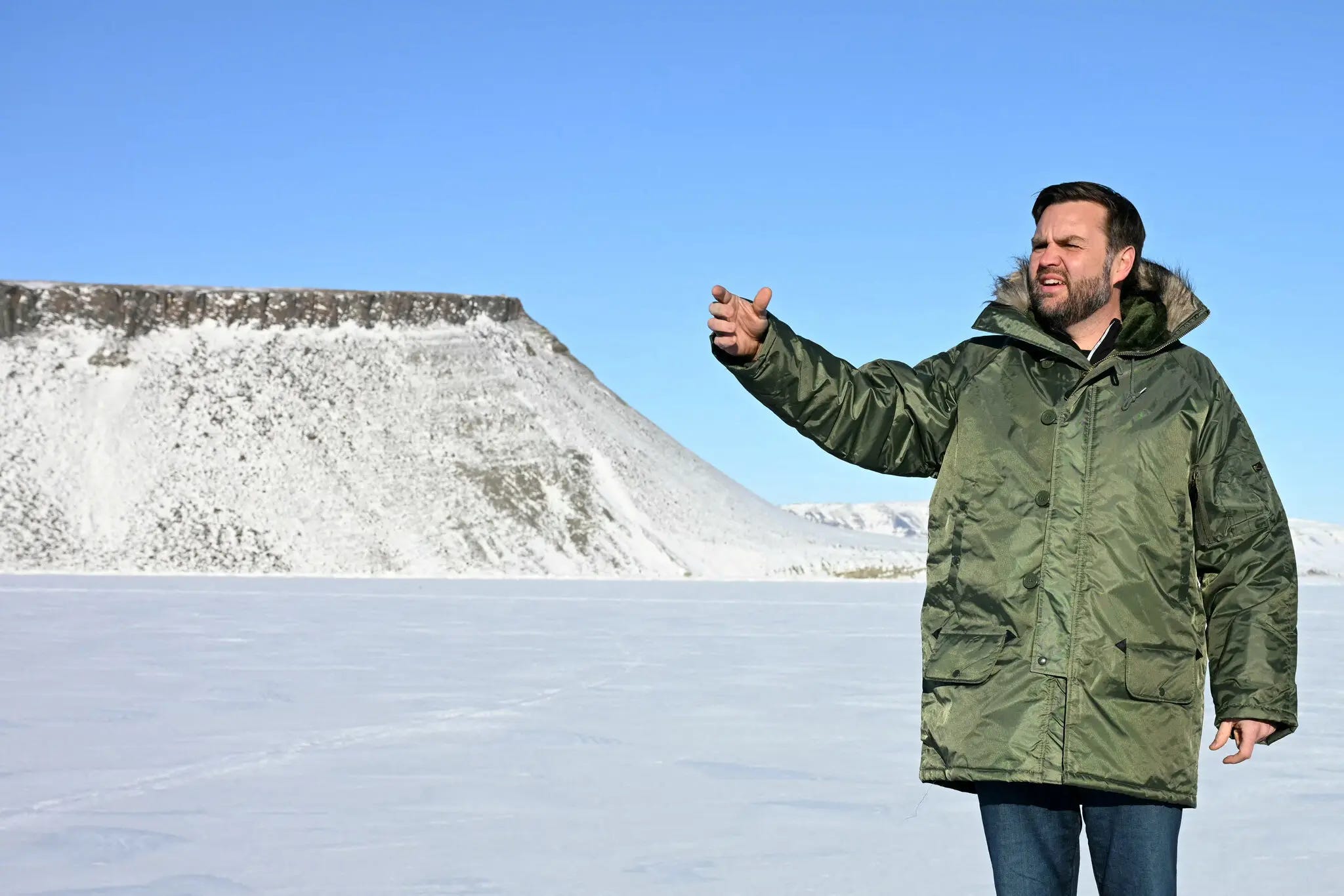
Somebody’s been editing the heck out of the Wikipedia entry on “Proposed United States acquisition of Greenland.” I imply no nefarious intent: Wikipedia is open-source and there’s been a lot to talk about. Indeed Wikipedia’s own “Talk” thread for the Greenland article has been getting pretty hot. “Under international law, the extraction of resources from an occupied or annexed territory for the benefit of the occupying power constitutes pillage, a war crime,” one reader complains.
Every once in a while somebody in the United States looks at maps of the country’s near abroad and thinks Greenland would look better if it were coloured the same shade as the U.S. In 1867 William Seward, who had been Lincoln’s Secretary of State and was now stuck doing the same job for Andrew Johnson, bought Alaska from the Russians and started looking around for an encore. Greenland was even bigger than Alaska, but Seward couldn’t close a deal. Pat Buchanan’s written about the idea a few times since the 1990s too.
US policy toward Greenland for the last 160 years could best be described as “listless and distracted.” Greenland is far away and taken. A U.S. president could always find plenty of other things to think about. Until this one. Donald Trump’s Truth Social post on Saturday, the one that announced sanctions against eight European countries that have mounted a listless and distracted defence of Greenland, contained other language that received less notice:
“Hundreds of Billions of Dollars are currently being spent on Security Programs having to do with ‘The Dome,’ including for the possible protection of Canada, and this very brilliant, but highly complex system can only work at its maximum potential and efficiency, because of angles, metes, and bounds, if this Land is included in it.”
Look, everyone, Trump’s worked out the metes and bounds and he needs Greenland. If you’re wondering whether this is anywhere close to being true, it may come as no surprise that Politico is unpersuaded — but Tass thinks the logic is ironclad.
What most critics of Trump’s plan agree on is that Trump could have had much of what his generals want for Arctic defence if he went about it the old-fashioned way — by asking Denmark, a NATO ally. It would probably have taken longer than the generals want. Denmark has, itself, often been listless and distracted about security matters. Don’t take MAGA’s word on it: “We have neglected for many years to make the necessary investments in ships and in aircraft that will help monitor our kingdom,” Truls Lund Poulsen, Denmark’s defence minister and deputy prime minister, told reporters 11 days before Trump’s second inauguration a year ago. Perimeter defence, especially in cold places far from votes, has a tendency to slide down national priority lists. Just look at Justin Trudeau’s Canada. I have said it before: this stuff is not even remotely optional. I used to wonder, listlessly and distractedly, whether Joe Biden would build a deep-water port in Canada’s arctic rather than waiting for Trudeau to catch up. At the time I meant it mostly as a nerdy joke. Times change.
Europe’s early moves in defence of Greenland — against a founding NATO ally — will surely be scaled up rapidly. They’ll need to be, because for now they look like a bad joke. Reuters says Germany’s sending a reconnaissance team of 13 — to Copenhagen, and then to Greenland later, perhaps after happy hour. Sweden sent three officers, Norway two, Britain and the Netherlands one each. Not for nothing, but the US picked up Nicolás Maduro from Caracas with 150 aircraft from 20 bases.
It’s probably not a coincidence that Trump ramped up his actions against Europe 10 days after many of the same countries gathered in Paris at a meeting of the “Coalition of the Willing” at the invitation of Emmanuel Macron. This was pretty consequential as these meetings go, with France and Britain agreeing to contribute troops inside Ukraine to support an eventual peace deal. Of course there’s no deal to support, Keir Starmer is the most unpopular PM since Britain began polling, and Macron has been unable to maintain effective control of France for nearly two years. (Among the 28 people who have served as prime minister during France’s Fifth Republic, all of the five shortest terms have been under Macron since 2024. He still sounds great on TV, but he’s a term-limited lame duck facing a National Assembly he cannot control.)
When all you have is a hammer, you pay close attention to who’s got a smaller hammer. None of the tenants Trump used to harass into the streets thought he was a nice guy. Most believed, correctly, that he didn’t have a legal leg to stand on. Most eventually gave up anyway. Trump sees a Brit, three Swedes, and the German National Belated Reconnaissance Team descending in waves onto Nuuk and he thinks, I can take these guys. Trump himself has political weaknesses and, um, human-capital deficits, but I wish I could be surer that he’s betting wrong. Trump Always Chickens Out is a popular acronym. European Union Chickens Out would work too. Hence today’s headline.
Trump has given himself two weeks before the 10% defence-of-Greenland tariff kicks in against those eight European countries, and almost five months until the tariff would increase to 25%. That’s plenty of time for Trump to forget he ever said any of this. There’d be precedent. But if I were the mayor of Nuuk I’d worry that it’s also plenty of time for the Willing to get cold feet.
Stephen Miller, for one, is counting on it. “Nobody’s going to fight the United States militarily over the future of Greenland,” Trump’s attack homunculus told CNN’s Jake Tapper in early January. Scott Bessent said the same on the Sunday shows this weekend. Europe will “come around,” he said, and: “Europe projects weakness, US projects strength.”
I want to be clear: Europe (and Canada) shouldn’t have to project strength against the United States. An alliance is supposed to be an alliance. The strongest country isn’t supposed to eat the other ones. This isn’t supposed to be the opening heist scene in The Dark Knight, where the homicidal clown starts shooting the pretend clowns to boost his take.
But we’re past the days when you could put any weight on a word like “supposed.” Those were the days when countless, countless Canadian ministerial references to some sort of “rules-based international order” might have had some utility. Now the stakes are higher and the rules less genteel.
Europe might have its most politically vulnerable leadership class in at least the third of a century since the Cold War ended, Starmer, Merz, Macron, Tusk. I wish it weren’t so, a couple of them would have my vote if I lived in those countries, but it is what it is. The times don’t wait for the best moment. Ukraine was run by a TV comedian with no real party when Ukraine’s eastern neighbour handed the country a test. The crew running Europe will save its Eastern and Western flanks, or lose them to bandits. Either way, they’ll be the most significant European leaders since De Gaulle and Adenauer. That’s just the hand history deals. Congratulations, gents, Putin and Trump have given you a promotion.
The simultaneous assaults on Nuuk and Minneapolis made Mark Carney’s visit to a string of high-risk destinations look better in comparison. Carney’s hardly the first prime minister to fly to China when relations with Washington are frustrating.
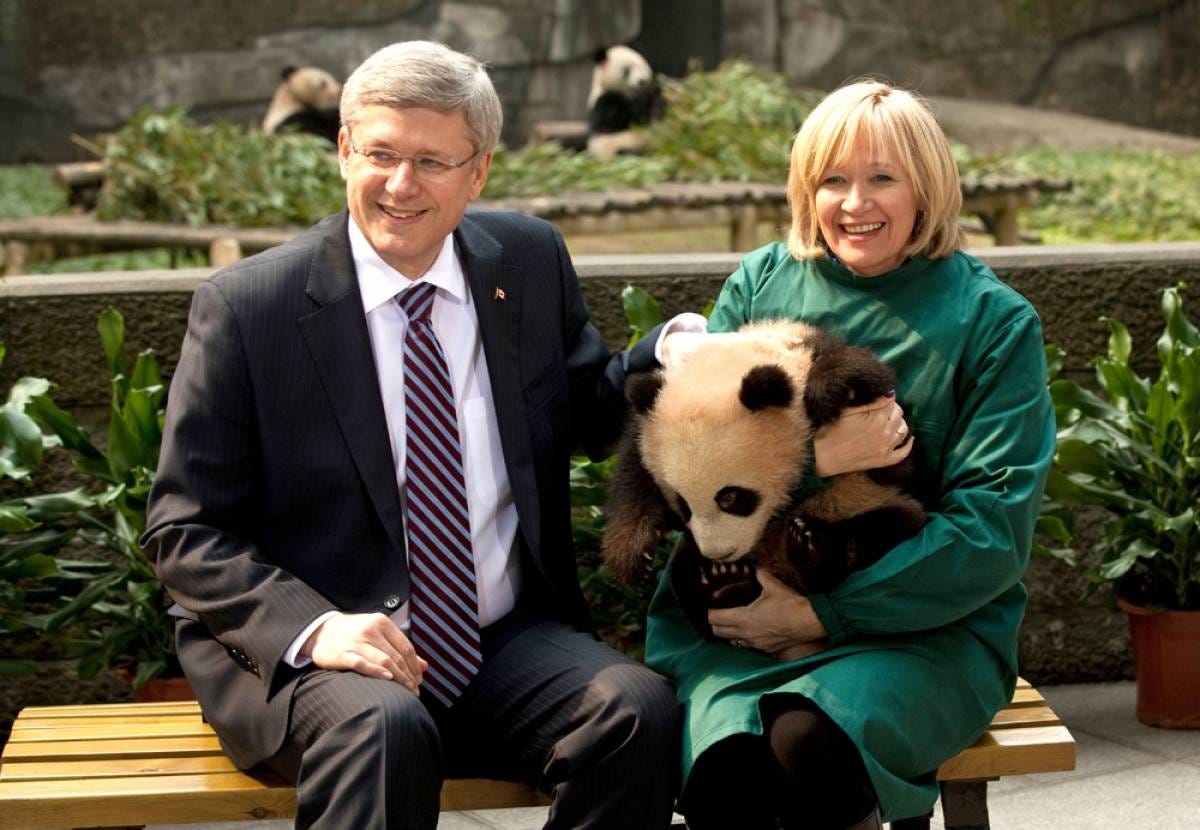
(More on that remarkable 2012 Harper trip to China here.) But Canadians have had more than a decade to learn more about the dangers of Xi Jinping’s embrace. In quieter times, Carney’s trip to China might have been seen as more inherently problematic. But we don’t have quiet weeks any more, so instead there was a lot of commentary to the effect that Trump drove Canada into China’s embrace, from sources near and far. Even Ben Woodfinden cuts Carney considerable, though properly not unlimited, slack.
Diversifying our trade from the U.S. to China is diversifying from the frying pan to the fire. Jonathan Manthorpe says Beijing’s hegemonic instincts are a manageable problem because Canada is more pragmatic than it was. Michael Kovrig’s fast-growing Substack oeuvre is a series of Notes saying, it is almost certainly not that easy.
I’m not sure Carney has much of a choice. If you want to meaningfully reduce dependence on the U.S., you need big other customers; China’s still the biggest; and Trump spent the week energetically making the case of getting the hell away from Trump.
But the world is a Möbius strip, so on Monday Carney will arrive in Davos — just in time to meet Trump. The president is leading the largest US delegation ever to Davos. Meanwhile you can still sign the petition to make sure nobody in a Pierre Poilievre Conservative government ever goes to Davos. He will be grateful for your email address.
It’s clear what Carney would like to do: keep as much U.S. trade as possible, while boosting trade elsewhere as fast as possible. Keep Trump’s trust, while mitigating the cost of Trump’s untrustworthiness. I don’t think he kidded himself that it would be easy, or even guaranteed to be possible. Given the scale of the task, it hasn’t been going badly, but Canada isn’t out of the woods, indeed it’s probably still heading farther into the woods. Trump Trumps when he wants to, not when it’s convenient. China doesn’t stop being China just because Canada needs a new market. None of this is about to get easier.
A note on comments. I've closed comments on the last few posts, and will keep them closed for a couple more, because too many readers have been squatting here to mulishly repeat partisan talking points and pick fights instead of having discussions. Comments will return soon, on a trial basis, but I simply won't have this place become a swamp.